


We provide a wide range of antibiotic susceptibility testing services such as Minimum Inhibitory Concentration (MIC) and Minimum Bactericidal Concentration (MBC) tests in accordance with the guidelines issued by the Clinical and Laboratory Standards Institute using broth micro dilution, broth macro-dilution, disk diffusion, and agar dilution methods.

Minimum Inhibitory Concentration (MIC)
The MIC testing services for New Chemical Entity (NCE) helps determine the lowest concentration of an antimicrobial agent that prevents visible growth of a microorganism under defined test conditions.
We use the MIC values to evaluate the activity of new antimicrobial agents and to determine the NCE’s susceptibilities of microorganisms. MIC is considered as the ‘gold standard’ for determining the susceptibility of organisms to antimicrobials and is therefore used to judge the performance of all other methods of susceptibility testing.
Cultured microbes are incubated with the NCE at various concentrations and measured for the results using agar dilution or broth dilution methodology to determine the MIC endpoint. Agar dilution involves incorporating different concentrations of the antimicrobial substance into agar medium followed by the application of a standardized number of cells to the surface of the agar plate. For broth dilution, we often determine it in 96-well micro titer plate format, where microorganisms are inoculated into a liquid growth medium in the presence of different concentrations of an antimicrobial agent. Growth is assessed after incubation for a defined period of time (16–20 hours).
Susceptibility testing is typically conducted using organisms that contribute to an infectious process warranting antimicrobial chemotherapy. Several microorganisms such as aerobic or anaerobic bacteria, yeasts can be tested based on the requirement.
Minimum Bactericidal Concentration (MBC)
The MBC testing services help determine the lowest concentration of an antimicrobial agent required to achieve bactericidal killing defined at 99.9% reduction in the initial inoculum. We chose it by sub-culturing broth dilution concentrations that inhibit the growth of a bacterial organism i.e. concentrations at and above the MIC. The broth dilutions are streaked onto agar surface and incubated for 24 to 48 hours. MBC is the lowest broth dilution of antimicrobial that prevents the growth of the organism on the agar plate. Failure of the organism to grow on the agar plate implies that all viable microorganisms have been eliminated.
Why Aurigene Minimum Inhibitory (MIC) and Minimum Bactericidal Concentration (MBC) Services?

Submissions to the US FDA

Highly- qualified and experienced scientists

Audited by the US FDA with zero 483 in 2019

BSL-2 compliant microbiology lab
Virtual Tour

Hyderabad R and D Center

Bangalore R and D Center
Connect with our scientific experts for your drug discovery, development, and manufacturing needs
We understand that clear communication is essential to successful collaborations, and that's why we have a dedicated team that is always ready to help you. Whether you have questions about our services, want to discuss a potential partnership, or simply want to learn more about our company, we're here to help.
Our team of experts is dedicated to providing personalised solutions tailored to your unique needs. So, please don't hesitate to reach out to us. We look forward to hearing from you and helping you achieve your business goals.
Resources
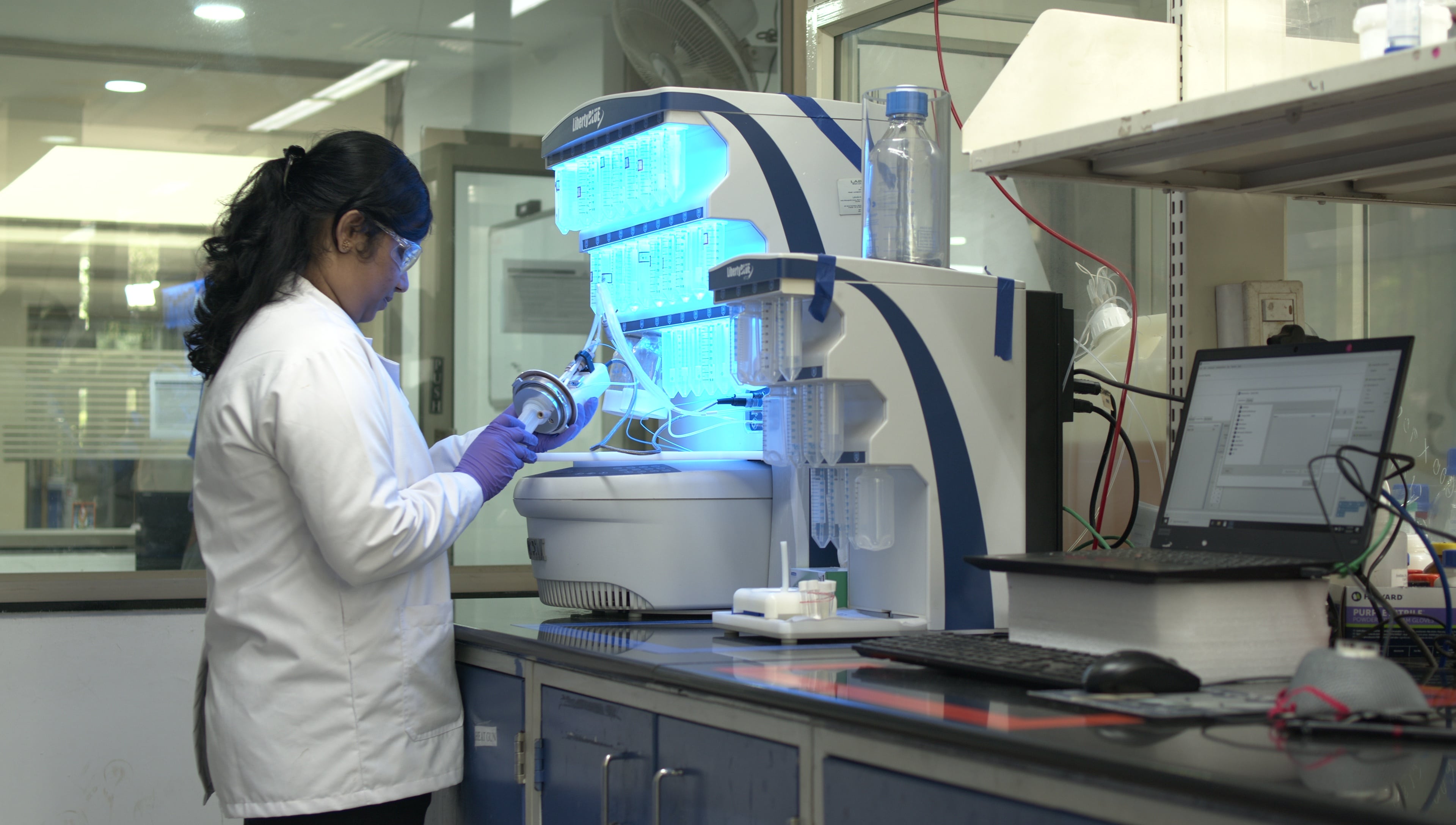
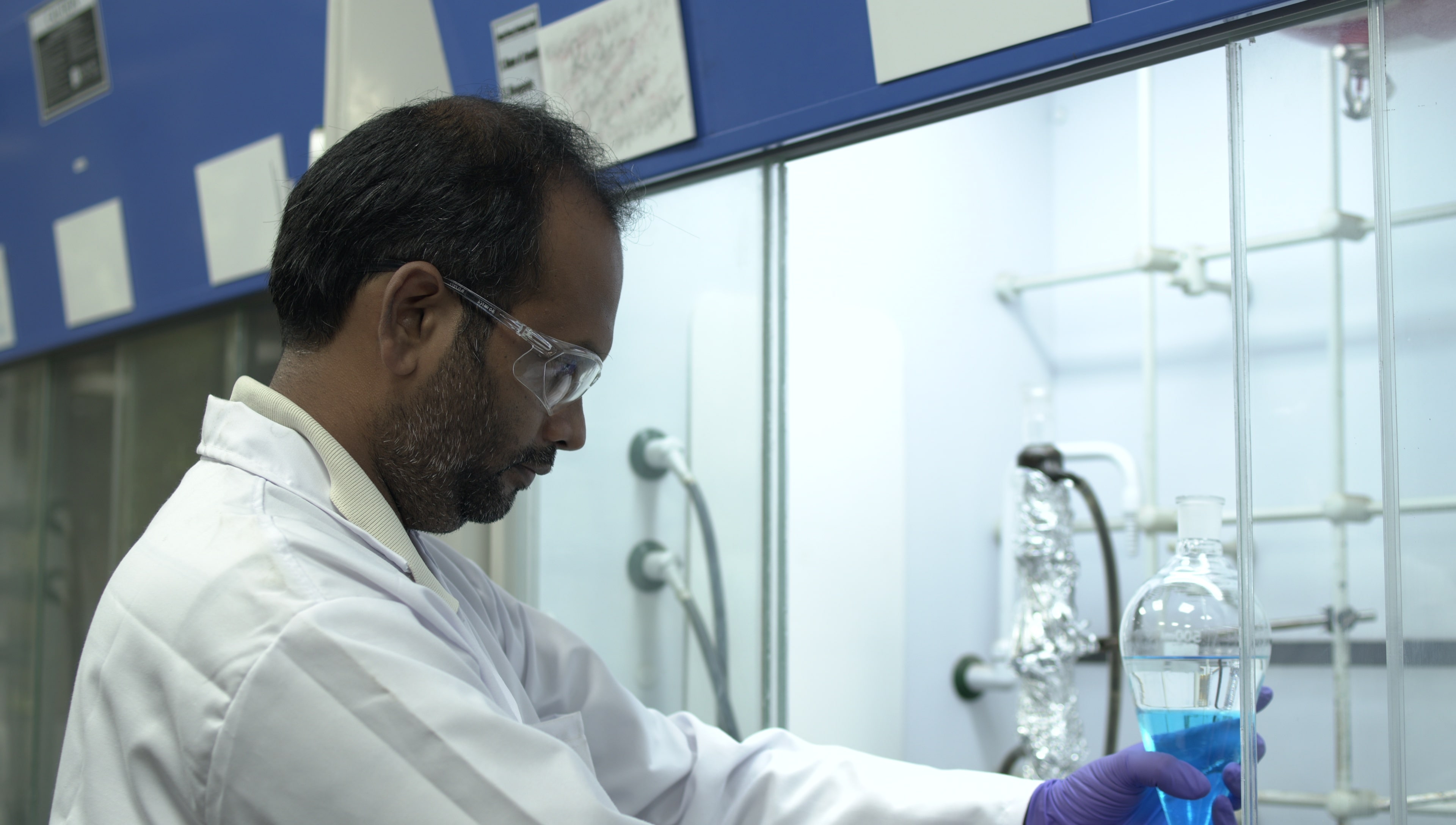
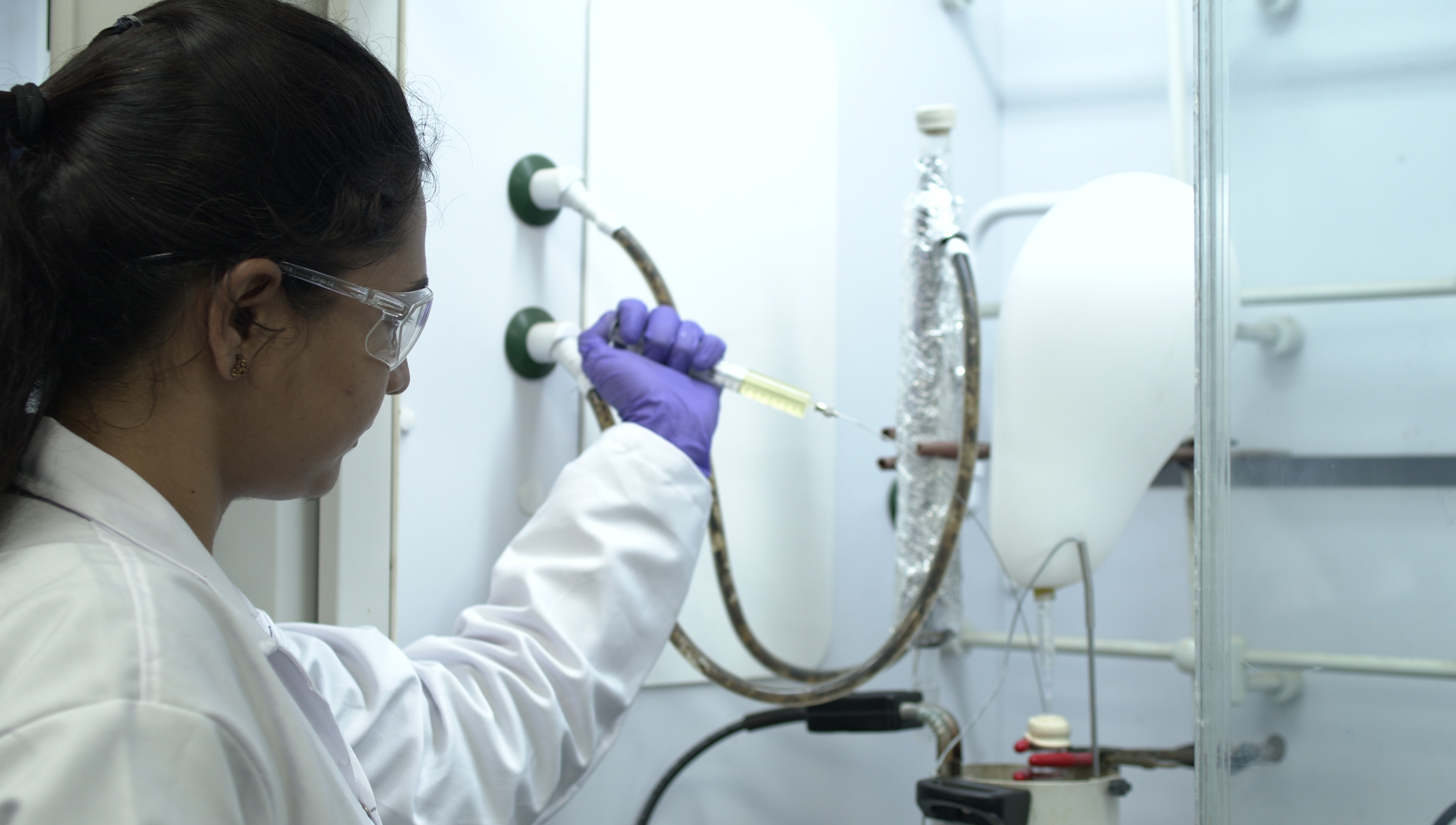

Accelerating Drug Discovery Through Innovative Partnerships
Accelerating Drug Discovery Through Innovative Partnerships Genomics plays a vital role in identifying which gene is associated with a specific disease. A gene called CNOT1 is for example known for it's effect on brain development and for impairing memory and learning. Despite the great promise genomics provides in understanding the disease, gene...
Read More
Methoxy Polyethylene Glycol (m-PEGs)
Aurigene Pharmaceutical Services is a leader in the synthesis of activated MethoxyPolyethyleneGlycol(m-PEGs), With a comprehensive product range and customized services. ...
Read More

Base mediated spirocyclization of quinazoline: one-step synthesis of spiro-isoindolinone dihydroquinazolinones
2020
A novel approach for the spiro-isoindolinone dihydroquinazolinones has been demonstrated from 2- aminobenzamide and 2-cyanomethyl benzoate in the presence of KHMDS as a base to get moderate yields. The reaction has been screened in various bases followed by solvents and a gram scale reaction has also been executed under the given conditions. Based on the controll...
Read More-
Ultrasound assisted rapid synthesis of mefenamic acid based indole derivatives under ligand free Cu-catalysis: Their pharmacological evaluation
2005
An improved and rapid synthesis of mefenamic acid based indole derivatives has been achieved via the ligand free Cu-catalyzed coupling-cyclization method under ultrasound irradiation. This simple, straightforward and inexpensive one-pot method involved the reaction of a terminal alkyne derived from mefenamic acid with 2- iodosulfanilides in the presence of CuI ...
Read More -
Formal synthesis of Cladospolide C & epi-Cladospolide C using R- (þ)-g-valerolactone as a chiral synthon
2005
The formal synthesis of Cladospolide-C and its analog is achieved by using enantiopure (R)-g evalerolactone 10. The significant points of this synthesis are the stereoselective dihydroxylation of a, bunsaturated ester 16 using Sharpless protocol, Wittig olefination of g evalerolactol 6 with triphenylphosphonium iodide salt 7, one pot selective oxidation ...
Read More -
Amberlite-15 promoted an unprecedented aza Michael rearrangement for one pot synthesis of dihydroquinazolinone compounds
2005
A new one pot multicomponent annulation strategy for the synthesis of various dihydroquinazolinone compounds has been developed using Amberlite-15 as a catalyst, giving good to moderate yields. In this reaction the substrate scope for amines and aldehydes was also investigated. The reaction has been checked on a large scale ...
Read More
You are about to leave Aurigene Pharmaceutical Services and affiliates website. Aurigene Pharmaceutical Services assumes no responsibility for the information presented on the external website or any further links from such sites. These links are presented to you only as a convenience, and the inclusion of any link does not imply endorsement by Aurigene Pharmaceutical Services.
If you wish to continue to this external website, click Proceed.


Leaving already?
Don't forget to join us at
CPHI Worldwide 2023.
October 24th-26th, 2023 | Barcelona, Spain
Get ready to accelerate your drug’s journey to the market