


Our dedicated team of highly skilled scientists from various disciplines conducts comprehensive toxicology studies. We perform GLP-compliant analytical and bioanalytical method validations, formulation analysis and bioanalysis to support preclinical toxicology studies. These validations and analyses are carried out for plasma drug level determinations and active ingredient content, homogeneity and stability of the formulations used in non-clinical safety studies.
Our vivarium, accredited by AAALAC, features state-of-the-art laboratories where clinical pathology analyses and histopathology procedures are conducted. We perform rodent toxicity studies in rats and mice, including repeat dose toxicity studies over a defined period of test article administration, with or without a recovery period.
The facility is GLP certified by the National GLP Monitoring Authority (NGCMA) of India. We offer repeat dose 4-day, 7-day, or 14-day dose range DRF toxicity studies in rats and mice. These studies aim to identify toxic effects over specific exposure periods and determine the Maximum Tolerated Dose (MTD) and/or No-Observed-Adverse-Effect-Level (NOAEL). The findings from DRF studies helps in the selection of dosage regimens for subsequent long-term or definitive GLP toxicology studies in rats and mice.
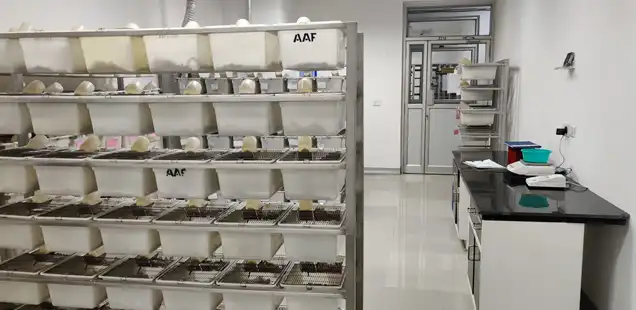
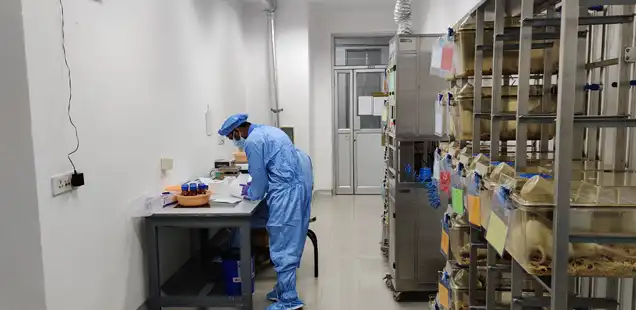
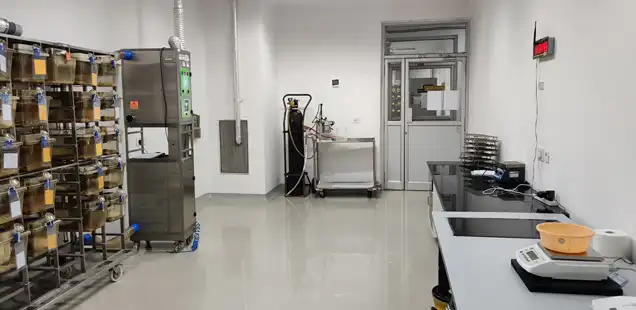
Exploratory Toxicology Studies
We offer a comprehensive range of exploratory toxicology studies, including single dose toxicity studies and 4-day, 7-day, or 14-day repeat dose toxicity studies. A single dose escalation phase is often integrated with the DRF study to gather maximum data. These studies aim to determine the Maximum Tolerated Dose (MTD) and/or No-Observed-Adverse-Effect-Level (NOAEL) over a short period of exposure through the intended clinical route in humans.
Our study designs are tailored to meet the client requirements considering the nature of the test compounds and intended product development program. Typical end points include mortality checks, clinical signs observations, body weight and feed intake measurements, clinical pathology, gross pathology observations, and limited histopathology.
GLP Definitive Toxicology Studies
We conduct GLP toxicology studies in rats and mice to support IND and ANDA submissions. These studies include acute, subacute (ranging from 7 to 28 days), subchronic (90 days), chronic (180 days to 1 years) toxicity and carcinogenicity studies. Studies are conducted as per the relevant regulatory guidelines (FDA, OECD, ICH, MHRA etc.) in AAALAC accredited animal facilities.
The end points of these toxicity studies include mortality checks, clinical signs of toxicity, body weight and food consumption measurements, interim/terminal clinical pathology (including haematology, clinical pathology and urinalysis), gross pathology and histopathology. Our highly experienced toxicologists conduct these studies in AAALAC-accredited facilities. Our clinical pathology and histopathology labs are equipped with GLP-compliant instruments from internationally reputed suppliers. The computerized systems used in our laboratories are validated and fit for purpose as required by the Principles of GLP based on the study design, satellite toxicokinetic (TK) groups are added, if required, to obtain plasma drug exposure at scheduled intervals (e.g., first and last days of dosing). To support formulation analysis and bioanalysis, our Toxicology laboratory coordinates with GLP compliant Analytical and DMPK facilities.
4-Day/7-Day/14-Day Repeat Dose DRF Toxicology Studies
The end points of the DRF toxicity studies include mortality checks, observation of clinical signs of toxicity, body weight and food consumption measurements, terminal clinical pathology (hematology, limited or comprehensive clinical pathology, urinalysis etc.), gross pathology and limited or comprehensive histopathology. As required by the study design, satellite toxicokinetic (TK) groups are added to obtain plasma drug exposure at scheduled intervals (e.g., first and last days of dosing). Based on client requirement, analysis of dose formulation samples will be included to estimate the drug concentration verification and homogeneity analysis. To support formulation analysis and bioanalysis, the Toxicology laboratory coordinates with GLP compliant Analytical and DMPK facilities located within the premises.
The in-life phase of these studies are performed by a group of highly experienced toxicologists in AAALAC accredited animal facilities. Our clinical pathology and the histopathology labs are state-of-the-art facilities equipped with GLP compliant instruments from internationally reputed suppliers. The computerized systems used in these laboratories are validated and fit for purpose as required by the principles of GLP.
Maximum Tolerated Dose (MTD) Studies
The main objectives of the single dose Maximum Tolerated Dose (MTD) studies is to determine the maximum dose level that is tolerated by the test species and to determine the dose levels for the subsequent repeat dose toxicity studies by the intended clinical / therapeutic exposure. In the absence of a relevant literature/data for a specific highest test dose, we test up to 2000 mg/kg as a limit dose in line with the recommendations of various international guidelines for conducting acute toxicity studies.
The study is conducted by assigning rats or mice into different treatment groups and exposing them to various graded dose levels to ascertain the toxicity at each dose level and determine the MTD. Essentially, the study end points cover mortality checks (at least twice daily), clinical signs examination for identification of evident toxicity (routine/detailed), body weight and food consumption measurements, gross pathology and as required by the study protocol and a limited histopathology.
We also conduct extended single-dose toxicity studies as per ICH guidelines that include, clinical pathology (hematology, clinical biochemistry, & comprehensive histopathology) in addition to the above stated study end points. Formulation analysis for the GLP toxicity studies are performed as required by the client.
Subacute Toxicity Studies
Subacute toxicity studies are typically designed as per guidelines such as FDA, OECD, ICH, DCGI and MHRA to evaluate the adverse effects of a substance when administered repeatedly over a short period, typically ranging from 14 to 28 days. These studies are crucial for understanding the potential toxic effects of a substance before it progresses to longer-term studies or clinical trials.
The primary objectives of subacute toxicity studies include:
- Identifying target organs: Determining which organs or systems are most affected by the substance.
- Establishing dose-response relationships: Understanding how different doses of the substance affect the severity and type of toxic effects.
- Determining NOAEL and LOAEL: Identifying the No-Observed-Adverse-Effect Level (NOAEL) and the Lowest-Observed-Adverse-Effect Level (LOAEL).
Subacute toxicity studies in rats and mice typically involve:
- Dosing: Animals are administered the test substance daily, starting at a dose expected to be near the therapeutic level and increasing stepwise until toxic signs are observed
- Duration: The study duration is usually between 14 and 28 days.
During the study, various parameters are monitored to assess the toxic effects:
- Clinical Observations: Regular checks for signs of toxicity, such as changes in behavior, appearance, and physiological functions.
- Body Weight and Food Consumption: Monitoring changes in body weight and food intake to detect any adverse effects on growth and metabolism.
- Clinical Pathology: Blood and urine tests to evaluate the impact on hematology, clinical chemistry, and urinalysis.
- Gross and Histopathology: Examination of organs and tissues at the end of the study to identify any pathological changes.
Subacute toxicity studies play a vital role in the early stages of drug development and chemical safety evaluation, helping to identify potential risks and inform the design of longer-term studies.
Why Aurigene Pharmaceutical Services

Expertise in designing and conducting studies to fulfil requirements of FDA, OECD, ICH, MHRA regulatory guidelines

Highly experienced and expert toxicology and analytical scientists

AAALAC-accredited animal facility

State-of-the-art facility equipped with GLP compliant instruments

Wide range of toxicology services
Virtual Tour

Hyderabad R and D Center
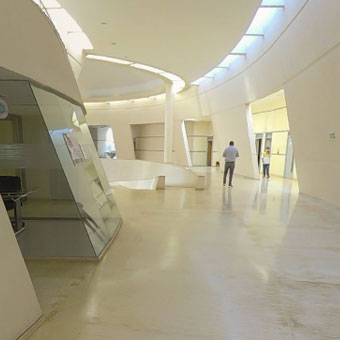
Bangalore R and D Center
Connect with our scientific experts for your drug discovery, development, and manufacturing needs
We understand that clear communication is essential to successful collaborations, and that's why we have a dedicated team that is always ready to help you. Whether you have questions about our services, want to discuss a potential partnership, or simply want to learn more about our company, we're here to help.
Our team of experts is dedicated to providing personalised solutions tailored to your unique needs. So, please don't hesitate to reach out to us. We look forward to hearing from you and helping you achieve your business goals.
Resources

Accelerating Drug Discovery Through Innovative Partnerships
Accelerating Drug Discovery Through Innovative Partnerships Genomics plays a vital role in identifying which gene is associated with a specific disease. A gene called CNOT1 is for example known for it's effect on brain development and for impairing memory and learning. Despite the great promise genomics provides in understanding the disease, gene...
Read More

Methoxy Polyethylene Glycol (m-PEGs)
Aurigene Pharmaceutical Services is a leader in the synthesis of activated MethoxyPolyethyleneGlycol(m-PEGs), With a comprehensive product range and customized services. ...
Read More


Base mediated spirocyclization of quinazoline: one-step synthesis of spiro-isoindolinone dihydroquinazolinones
2020
A novel approach for the spiro-isoindolinone dihydroquinazolinones has been demonstrated from 2- aminobenzamide and 2-cyanomethyl benzoate in the presence of KHMDS as a base to get moderate yields. The reaction has been screened in various bases followed by solvents and a gram scale reaction has also been executed under the given conditions. Based on the controll...
Read More-
Ultrasound assisted rapid synthesis of mefenamic acid based indole derivatives under ligand free Cu-catalysis: Their pharmacological evaluation
2005
An improved and rapid synthesis of mefenamic acid based indole derivatives has been achieved via the ligand free Cu-catalyzed coupling-cyclization method under ultrasound irradiation. This simple, straightforward and inexpensive one-pot method involved the reaction of a terminal alkyne derived from mefenamic acid with 2- iodosulfanilides in the presence of CuI ...
Read More -
Formal synthesis of Cladospolide C & epi-Cladospolide C using R- (þ)-g-valerolactone as a chiral synthon
2005
The formal synthesis of Cladospolide-C and its analog is achieved by using enantiopure (R)-g evalerolactone 10. The significant points of this synthesis are the stereoselective dihydroxylation of a, bunsaturated ester 16 using Sharpless protocol, Wittig olefination of g evalerolactol 6 with triphenylphosphonium iodide salt 7, one pot selective oxidation ...
Read More -
Amberlite-15 promoted an unprecedented aza Michael rearrangement for one pot synthesis of dihydroquinazolinone compounds
2005
A new one pot multicomponent annulation strategy for the synthesis of various dihydroquinazolinone compounds has been developed using Amberlite-15 as a catalyst, giving good to moderate yields. In this reaction the substrate scope for amines and aldehydes was also investigated. The reaction has been checked on a large scale ...
Read More
You are about to leave Aurigene Pharmaceutical Services and affiliates website. Aurigene Pharmaceutical Services assumes no responsibility for the information presented on the external website or any further links from such sites. These links are presented to you only as a convenience, and the inclusion of any link does not imply endorsement by Aurigene Pharmaceutical Services.
If you wish to continue to this external website, click Proceed.


Leaving already?
Don't forget to join us at
CPHI Worldwide 2023.
October 24th-26th, 2023 | Barcelona, Spain
Get ready to accelerate your drug’s journey to the market