

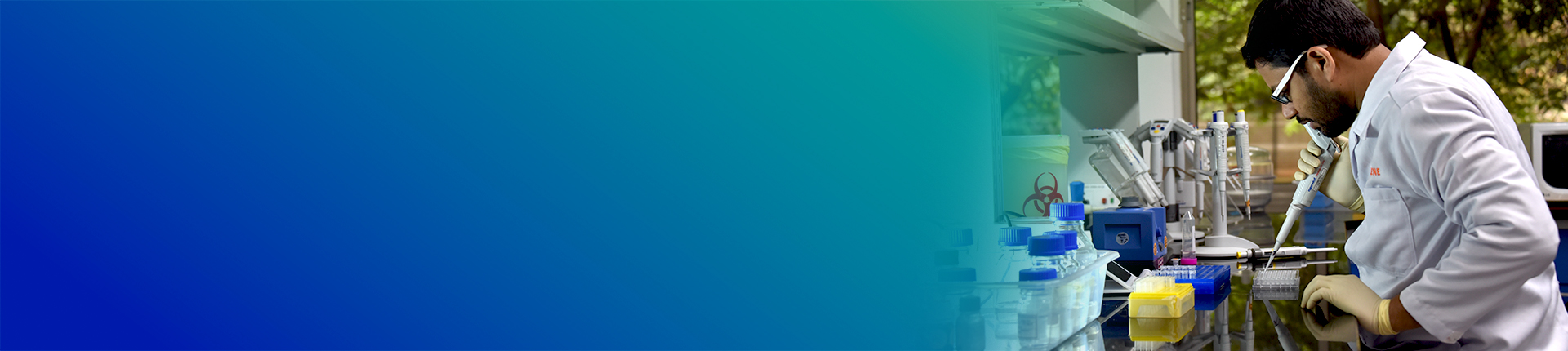
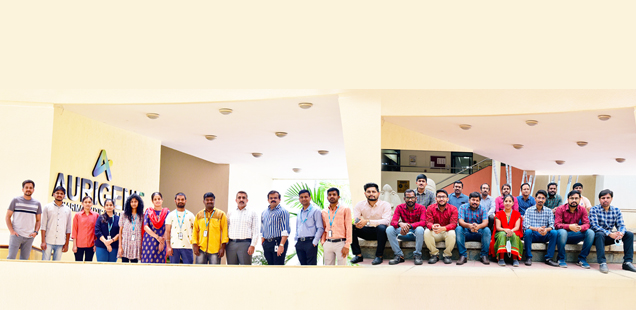
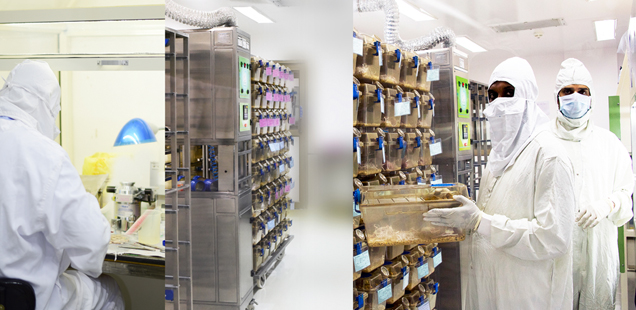
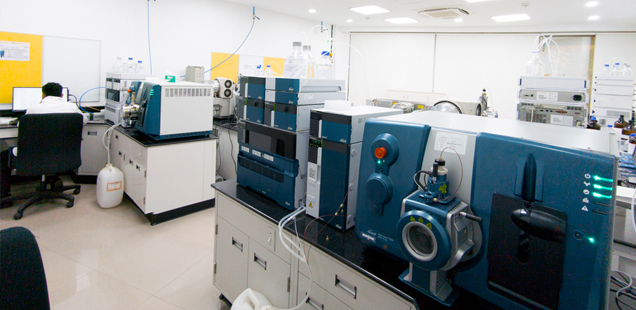
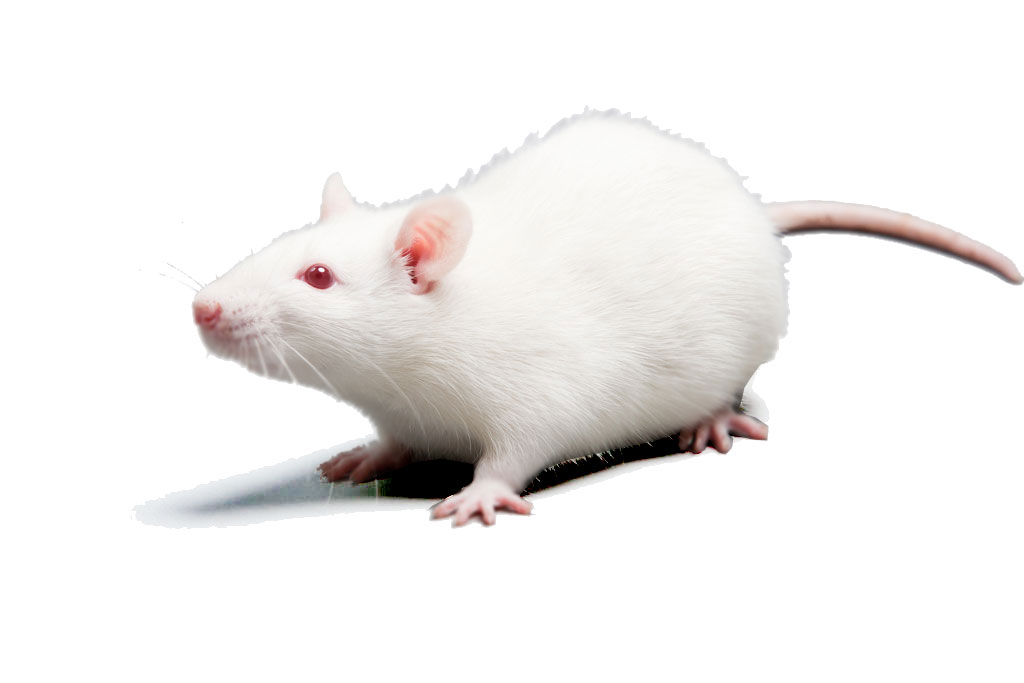
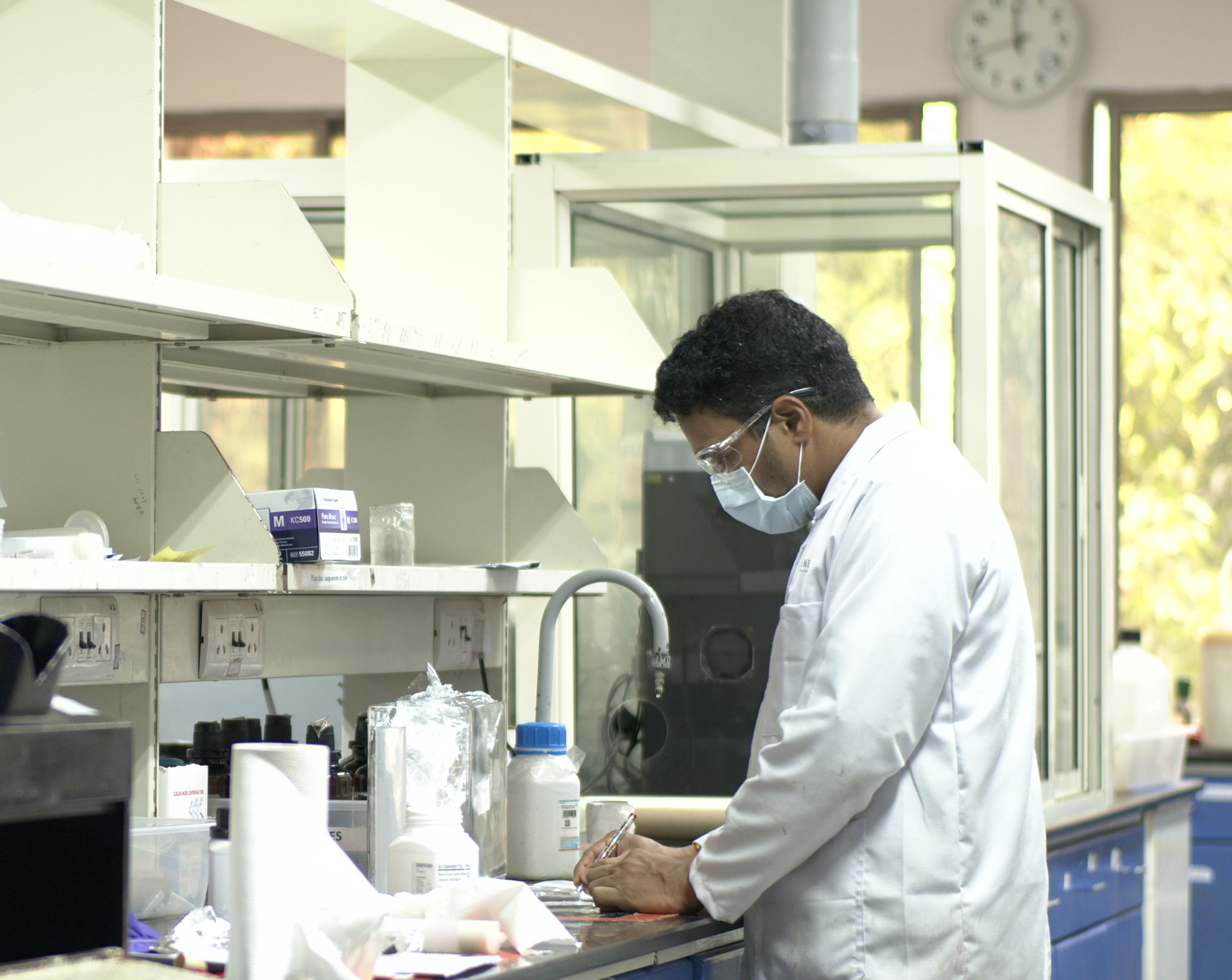
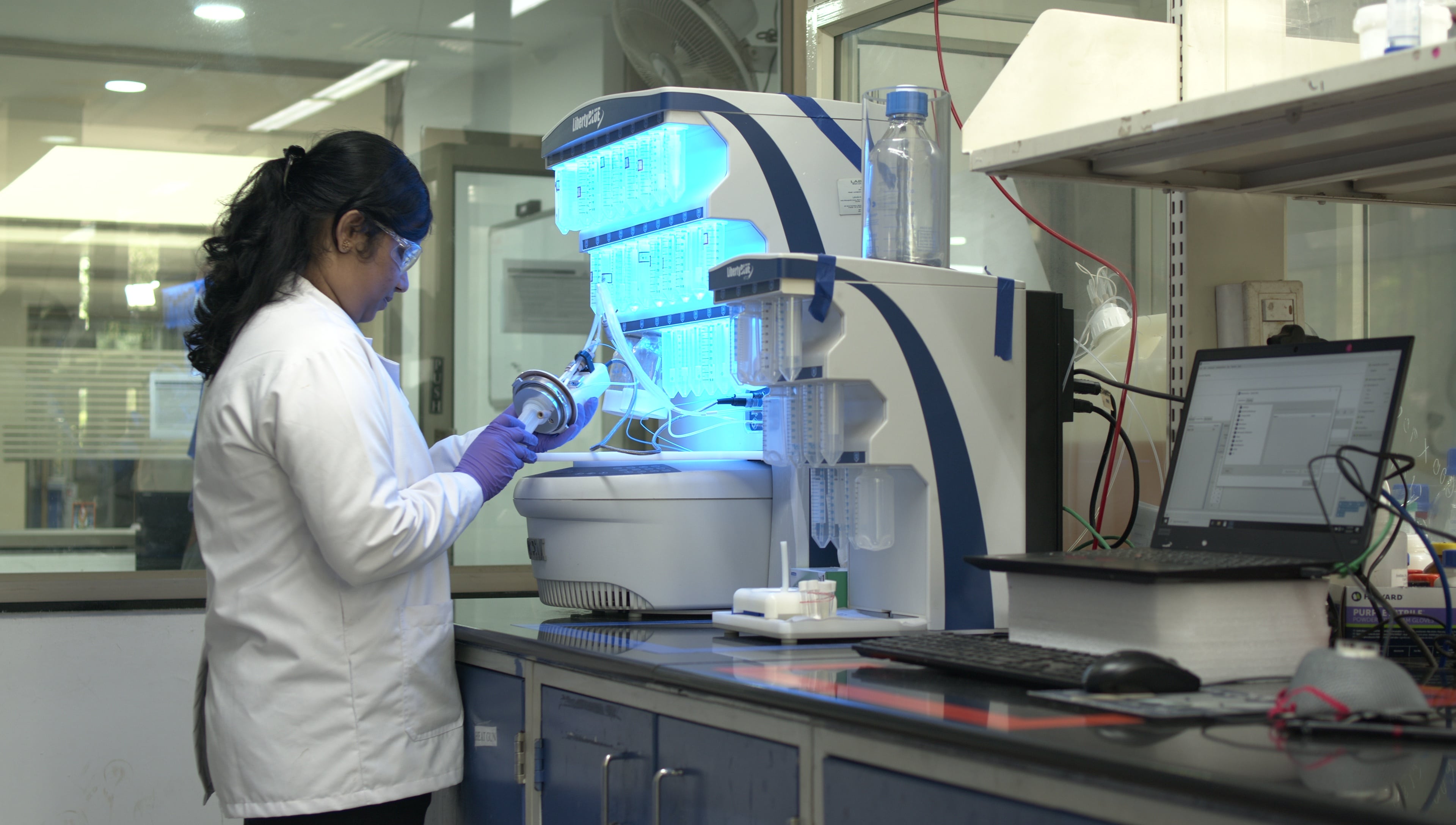
Our DMPK team is having expertise in both integrated drug discovery and standalone DMPK services with experience over 16 years. Our capabilities helped us to deliver more than 65 IDD projects. We design customized protocols and perform assays based on client or project requirements. The DMPK facility spanning an area of 10,000 sq.ft. in Bangalore and Hyderabad locations consists of state-of-the-art in vitro ADME and tissue culture labs, AAALAC accredited animal facility for in vivo PK studies in rats, mice & dogs and GLP & Non-GLP bioanalytical labs with high-end LC-MS/MS instruments.
In vitro ADME capable of high-throughput screening with best in industry turnaround times. In vivo PK studies with various established surgical models. Experience in DMPK studies and bioanalysis of small molecules, PROTACs, therapeutic peptides and biomarkers. Automated compound management and data handling systems.

Why Aurigene ADME/DMPK Services?

Turnaround time: In vitro Assays: 5 working days. In vivo PK Studies: 7 working days

Quality & accuracy

Customized protocols

Compound management and data automation

Broad panel of in vitro ADME & in vivo PK study designs

Bioanalysis of small molecules, therapeutic peptides, biomarkers & complex molecules. Delivered 200+ GLP studies
Virtual Tour

Hyderabad R and D Center

Bangalore R and D Center
Connect with our scientific experts for your drug discovery, development, and manufacturing needs
We understand that clear communication is essential to successful collaborations, and that's why we have a dedicated team that is always ready to help you. Whether you have questions about our services, want to discuss a potential partnership, or simply want to learn more about our company, we're here to help.
Our team of experts is dedicated to providing personalised solutions tailored to your unique needs. So, please don't hesitate to reach out to us. We look forward to hearing from you and helping you achieve your business goals.
Resources
Accelerating Drug Discovery Through Innovative Partnerships
Accelerating Drug Discovery Through Innovative Partnerships Genomics plays a vital role in identifying which gene is associated with a specific disease. A gene called CNOT1 is for example known for it's effect on brain development and for impairing memory and learning. Despite the great promise genomics provides in understanding the disease, gene...
Read More
Methoxy Polyethylene Glycol (m-PEGs)
Aurigene Pharmaceutical Services is a leader in the synthesis of activated MethoxyPolyethyleneGlycol(m-PEGs), With a comprehensive product range and customized services. ...
Read More
Base mediated spirocyclization of quinazoline: one-step synthesis of spiro-isoindolinone dihydroquinazolinones
2020
A novel approach for the spiro-isoindolinone dihydroquinazolinones has been demonstrated from 2- aminobenzamide and 2-cyanomethyl benzoate in the presence of KHMDS as a base to get moderate yields. The reaction has been screened in various bases followed by solvents and a gram scale reaction has also been executed under the given conditions. Based on the controll...
Read More-
Ultrasound assisted rapid synthesis of mefenamic acid based indole derivatives under ligand free Cu-catalysis: Their pharmacological evaluation
2005
An improved and rapid synthesis of mefenamic acid based indole derivatives has been achieved via the ligand free Cu-catalyzed coupling-cyclization method under ultrasound irradiation. This simple, straightforward and inexpensive one-pot method involved the reaction of a terminal alkyne derived from mefenamic acid with 2- iodosulfanilides in the presence of CuI ...
Read More -
Formal synthesis of Cladospolide C & epi-Cladospolide C using R- (þ)-g-valerolactone as a chiral synthon
2005
The formal synthesis of Cladospolide-C and its analog is achieved by using enantiopure (R)-g evalerolactone 10. The significant points of this synthesis are the stereoselective dihydroxylation of a, bunsaturated ester 16 using Sharpless protocol, Wittig olefination of g evalerolactol 6 with triphenylphosphonium iodide salt 7, one pot selective oxidation ...
Read More -
Amberlite-15 promoted an unprecedented aza Michael rearrangement for one pot synthesis of dihydroquinazolinone compounds
2005
A new one pot multicomponent annulation strategy for the synthesis of various dihydroquinazolinone compounds has been developed using Amberlite-15 as a catalyst, giving good to moderate yields. In this reaction the substrate scope for amines and aldehydes was also investigated. The reaction has been checked on a large scale ...
Read More
Frequently asked questions
Why is ADME important?
ADME data helps scientists assess and optimize the absorption, distribution, metabolism, and excretion of the drug/NCE early in the drug discovery process. This helps to minimize late-stage failures in in-vivo safety and efficacy studies and clinical trials.
What is ADME testing?
ADME testing involves various in-vitro and in-vivo assays used to assess the properties that determine the Absorption, Distribution, Metabolism, and Excretion (ADME) of NCEs/ drug molecules.
What is the ADME process?
The ADME process involves the characterization of a drug by using different assays to determine its absorption, distribution, metabolism, and excretion properties. This data is critical to prioritize and advance drug/ NCEs for future development.
What is DMPK in drug discovery?
DMPK is the study of the drug-like properties of new chemical entities(NCE)/drugs to understand its metabolism and pharmacokinetic profile.
What is the purpose of a PK study?
PK studies are an integral part of drug development. It helps to understand a new chemical entity (NCEs)/drug's pharmacokinetic behaviour in the body and involves the study of distribution, metabolism, clearance and bioavailability.
What is the difference between PK and PD?
Pharmacokinetics (PK) is the response of the body to the drug. Whereas Pharmacodynamics (PD) is the action of the drug on our body.
What are the recommended storage conditions for Oligonucleotides?
For a period of 6 weeks, Oligos can be stored in T10E1 buffer at 37°C and for the long term, Oligonucleotides can be dried down and stored with or without TE buffer at -20°C.
What is pharmacodynamics of a drug?
Pharmacodynamics (PD) of a drug refers to the biochemical and physiological effects caused by the drug/NCE in the body.
You are about to leave Aurigene Pharmaceutical Services and affiliates website. Aurigene Pharmaceutical Services assumes no responsibility for the information presented on the external website or any further links from such sites. These links are presented to you only as a convenience, and the inclusion of any link does not imply endorsement by Aurigene Pharmaceutical Services.
If you wish to continue to this external website, click Proceed.


Leaving already?
Don't forget to join us at
CPHI Worldwide 2023.
October 24th-26th, 2023 | Barcelona, Spain
Get ready to accelerate your drug’s journey to the market